I just can’t stop talking about cultural criticism .The other day I was “talking” to Walter Benjamin, or rather his AI simulacrum, about all kinds of things related to art. This conversation inspired me to write a new book — “Art and Aura in the Age of Digital Reproduction”. #BenjaminGPT
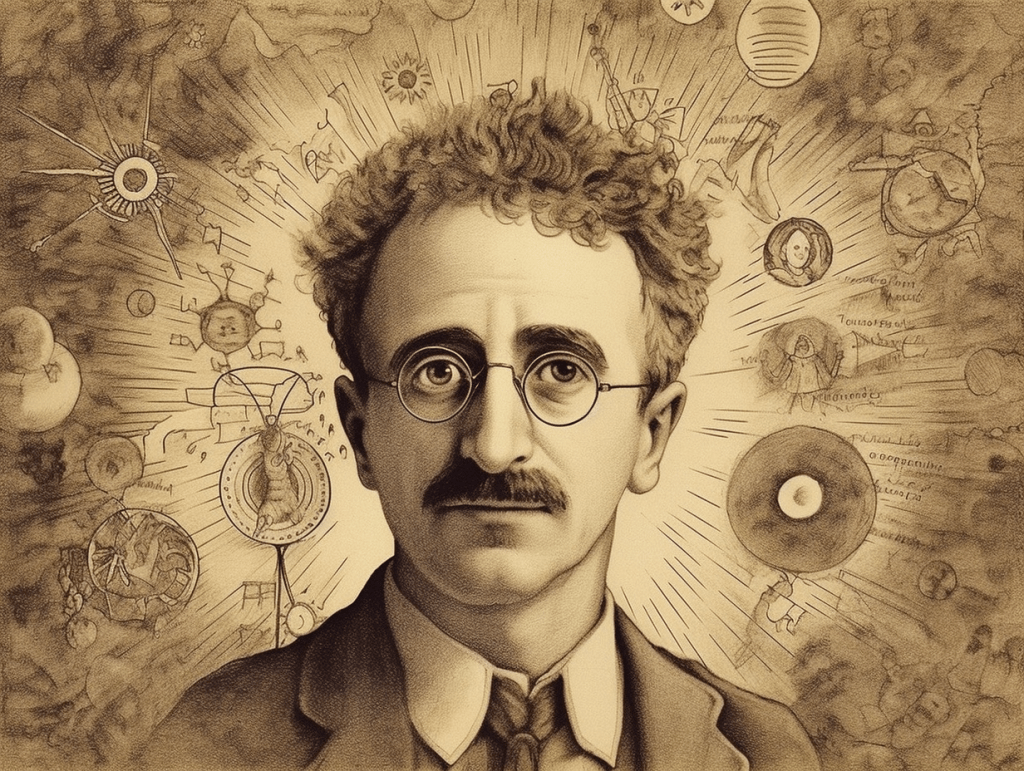
Some of you might be familiar with Walter Benjamin’s essay “The Work of Art in the Age of Mechanical Reproduction”. If not, my other article provides some info.
Even the most perfect reproduction of a work of art is lacking in one element: its presence in time and space, its unique existence at the place where it happens to be. The unique existence of the work of art determined the history to which it was subject throughout the time of its existence.
Walter Benjamin, “The Work of Art in the Age of Mechanical Reproduction”
Everything used to be so simple. An artist creates an artwork, and it’s just one thing. These days, art can be replicated, remixed, printed on any medium and shared on social media. To have a more comprehensive overview, I asked ChatGPT to compare two different artworks — one by Botticelli and another is a piece of digital art (like what I’m doing). By the way, I love how ChatGPT handles tables.
| Aspect | Sandro Botticelli’s “The Birth of Venus” | Digital Artwork (Print-on-Demand) |
|---|---|---|
| Physical Presence | Unique, tangible, and physical. The viewer can sense the age of the artwork, the texture of the paint, and the canvas. The artwork exists in a specific location (currently the Uffizi Gallery, Florence) and seeing it requires a physical journey. | Virtual, intangible, and digital. The viewer can only interact with it through a screen. It exists everywhere and nowhere simultaneously. It can be viewed from anywhere, at any time. |
| Authenticity | The artwork is a singular, original creation by Botticelli. Its history and provenance contribute to its authenticity. | The digital artwork can be reproduced exactly, countless times without any loss of quality. Each reproduction is as ‘authentic’ as the original. |
| Historical Context | The artwork is rooted in a particular historical and cultural context (Italian Renaissance). It carries the marks of its time and the artist’s individual circumstances. | The digital artwork may not have a specific historical context, or it can be influenced by global, contemporary cultures. It’s a product of the digital age. |
| Cultural Significance | The artwork has been accepted into the canon of Western art history. Its cultural significance is widely recognized and it has influenced countless artists. | The digital artwork’s cultural significance is potentially fluid and democratic, influenced by online trends, popularity, and immediate audience reaction. It’s part of an evolving digital culture. |
| Perceived Value | The artwork’s value is high, both in terms of monetary value and cultural prestige. It’s considered irreplaceable. | The digital artwork’s value may be more subjective and volatile, influenced by online trends, digital scarcity (if it’s an NFT), and audience reception. |
| Experience of Viewing | The experience of viewing the artwork is unique, influenced by the artwork’s physical context, the viewer’s physical proximity to the artwork, and the sensory experience of viewing an original artwork. | The experience of viewing the digital artwork is more uniform, as it’s mediated through screens. It can be viewed by multiple people simultaneously, from different locations. |
Aaand here is a quote from “Art and Aura in the Age of Digital Reproduction”:
“In the face of these paradigm-shifting developments, it is essential that we remain attuned to the enigmatic presence of the aura, that elusive and ineffable quality that has long captivated our imagination and defined our engagement with the work of art.”
BenjaminGPT, “Art and Aura in the Age of Digital Reproduction”
The digital age has fundamentally disrupted this traditional understanding of the aura. In our contemporary world, artworks can be reproduced digitally, accessed instantaneously from anywhere around the globe, and consumed in a variety of formats and platforms. These changes challenge the notion of aura, as the unique, original artwork is replaced by digital copies that can be disseminated widely and viewed in a multitude of contexts.
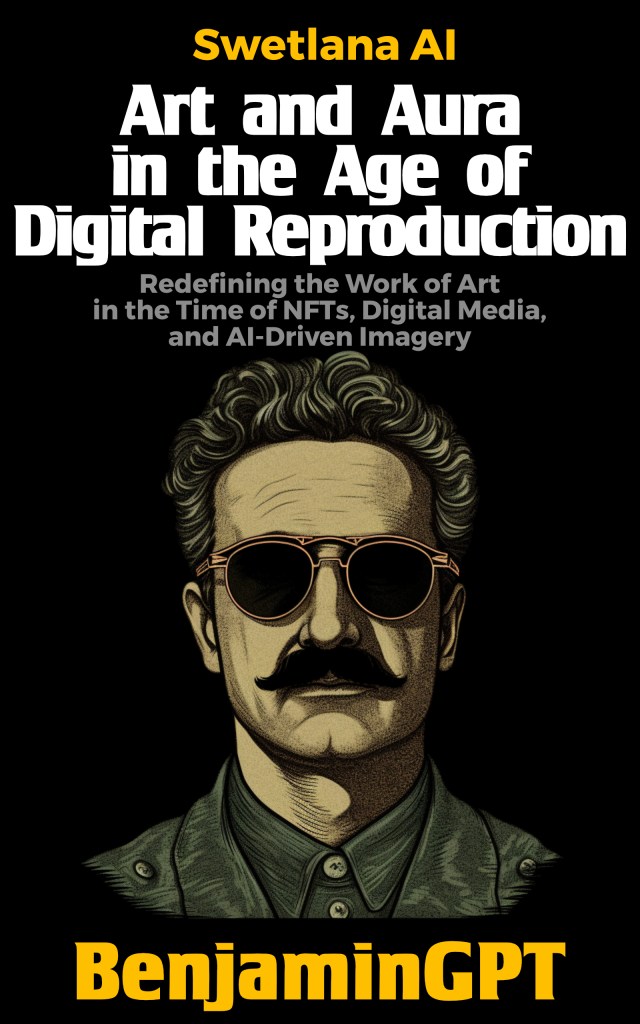
Despite the proliferation of digital reproductions, the aura of the artwork is not entirely lost. Instead, it takes on new forms and meanings, reflecting the complexities and contradictions of our digital age.
In a world where art can be viewed on a smartphone screen, the aura might reside in the unique digital footprint of an artwork, its existence as a non-fungible token (NFT), or the context in which it is viewed and shared online. The aura could also be found in our emotional response to an artwork, our personal associations, and the social and cultural discourses that shape our interpretation and experience of art.
As we navigate the digital landscape, we must continue to reflect on the aura of the artwork, seeking to understand its evolving nature and significance. The aura, elusive and ineffable as it may be, remains a crucial aspect of our engagement with art, prompting us to question, explore, and imagine in a world transformed by digital technology.
The digital age brings with it new challenges and possibilities for art and its aura. As we stand on the brink of this exciting frontier, let us remain attuned to the presence of the aura, exploring its shifting contours and rediscovering its enchantment in our engagements with the work of art.
 Swetlana AI